Anchoring the Future: Why Maritime Cybersecurity is the New Frontier for OT
Anchoring the Future: Why Maritime Cybersecurity is the New Frontier for OT
The maritime industry is the lifeblood of global commerce, responsible for transporting over 90% of the world's goods and global trade. As Admiral Tanguy Botman of the Belgian Navy once said: "No Shipping, No Shopping". Just look at the worldwide effects of the Suez Canal blockage in 2021 by the Ever Given.
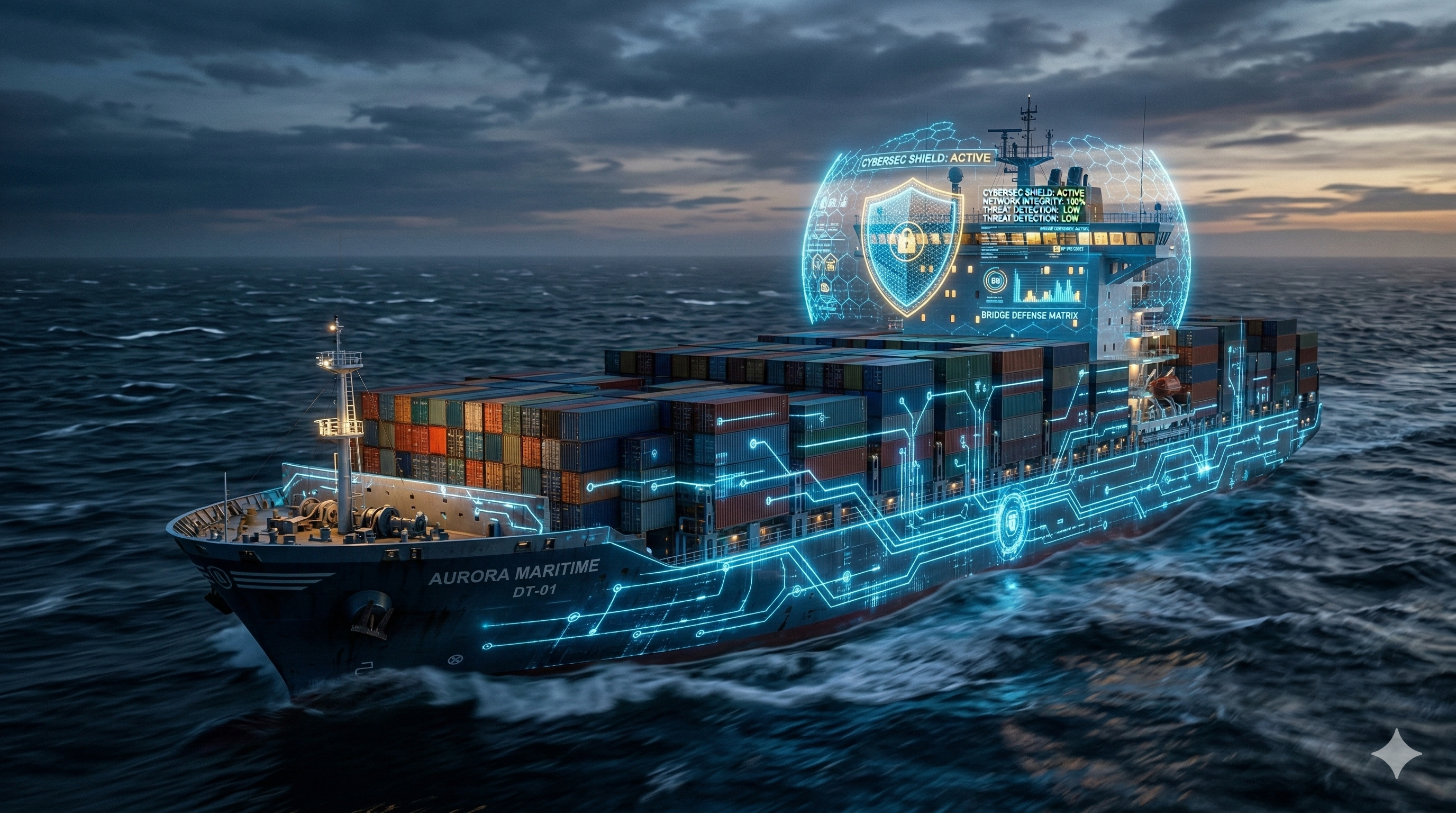
However, the shift towards "Smart Shipping" introduces a complex layer of risk. As vessels become more interconnected, the line between traditional IT and OT (Operational Technology) continues to blur, leaving critical systems vulnerable to disruption.
At its core, maritime cybersecurity is not a standalone discipline; it is a specialized evolution of industrial security. Just as a power plant or a factory relies on PLCs and SCADA systems, a modern ship is a floating industrial site navigating the harshest environments on earth.
The mission of Cyber3Lab is to apply our deep-seated expertise in OT security to ensure that these "floating factories" remain safe and resilient.
Main section
Quick facts
/
A Floating Factory: Modern vessels rely on over 20 integrated OT systems, from engine control to ballast management
/
Increased Surface: The adoption of Starlink and low-earth orbit satellites has bridged the "air gap" that once protected ships at sea
/
Regulatory Pressure: The IMO (International Maritime Organization) now requires cyber risk management to be integrated into safety management systems
The Convergence of Industrial Security and the High Seas
Understanding maritime cybersecurity requires a shift in perspective. For years, the maritime sector operated under the assumption of "security through obscurity", where being in the middle of the ocean provided a natural barrier to digital interference.
That era has ended. Today’s vessels are equipped with Electronic Chart Display and Information Systems (ECDIS), Automatic Identification Systems (AIS), and Global Navigation Satellite Systems (GNSS), all of which are susceptible to spoofing and jamming.
From an engineering standpoint, the systems found on a vessel - such as the Main Engine Control, Power Management Systems (PMS), and Steering Gear - are identical in logic to the Industrial Control Systems (ICS) found in land-based manufacturing companies. They utilize the same protocols and face the same vulnerabilities, such as unpatched legacy software and lack of network segmentation. This makes maritime security a natural extension of our existing industrial security portfolio.
We recognize that a cyber incident at sea is rarely just a data breach; it is a safety incident. A compromised ballast control system can lead to stability issues, while a hijacked propulsion system can cause a collision in a crowded shipping lane. By applying the rigorous standards of OT security - such as the IEC 62443 framework - to the maritime domain, we can identify vulnerabilities before they are exploited.
Our interest in this field stems from the realization that maritime security is currently where manufacturing was a decade ago. There is a pressing need for specialized hardening of shipboard networks and a deeper understanding of how satellite latency affects security telemetry. We are actively expanding our research to include maritime-specific protocols and the unique challenges of maintaining "zero trust" in a remote, bandwidth-constrained environment.
The complexity of maritime systems requires a multidisciplinary approach. It isn't enough to secure the bridge; one must also secure the sensors in the engine room and the remote diagnostic ports used by onshore technicians. As we move toward autonomous shipping, the stakes will only get higher.
Our transition into this field is driven by a desire to bring professional, industrial-grade security to the world’s most vital supply chains.
Bottom section
Research Resources and Cyber3Lab Solutions
To support the community and further our collective understanding, we have curated a list of essential resources regarding maritime cybersecurity standards and threat intelligence:
- IMO Resolution MSC.428(98): The foundational document for maritime cyber risk management. Also check out IMO's maritime cyber risk page.
- ENISA Port Security Report "Cyber Risk Management for Ports": Detailed analysis of cyber threats facing port infrastructure and maritime logistics.
- DNV Cyber Secure Class Notation: Technical requirements for securing vessel systems during construction and operation.
We are also
At Cyber3Lab, we specialize in identifying and mitigating risks within complex industrial environments. Whether you are operating a chemical plant or a fleet of VLCCs, our security audits and resilience strategies are designed to protect your physical assets from digital threats. You can learn more about our methodology and current projects at our Cyber3Lab website.
Contributors
Authors
/
Patrick Van Renterghem, AI, CyberSecurity, Web3, Immersive Tech, Quantum, ... Community Builder & LLL Coordinator
Want to know more about our team?
Visit the team page
Last updated on: 5/4/2026
/